History
Michael T. Mangum Hall of Fame 2024
by Catherine McLearen
As founder and the first show coordinator of the Old Time Barnegat Bay Decoy & Gunning Show, it’s only fitting for Mike Mangum to receive the first Decoy Show Hall of Fame Award. In 1983 when Park Naturalist Mike Mangum and Tip Seaman Park Supervisor Joe Smith were approached by Jim Allen and Bud Seaman of the New Jersey Decoy Collectors Association about holding a buy/swap/sell tailgate at Tip Seaman Park, Mangum had a better idea. Instead of hosting an event for collectors to swap decoys, Ocean County Parks would put on a show to educate the public about the traditions of Barnegat Bay while helping to preserve them.
So they got to work with the help of other Parks staff, volunteers, non-profits, and local businesses. They put together a show committee of carvers, collectors, boat builders, baymen, and others with expertise to come up with ideas for the show and write the contest rules.
“The decoy show committee has always been really important with coming up with ideas. It wasn’t just me sitting around coming up with these ideas, usually it was somebody else. It was a collaborative effort.”
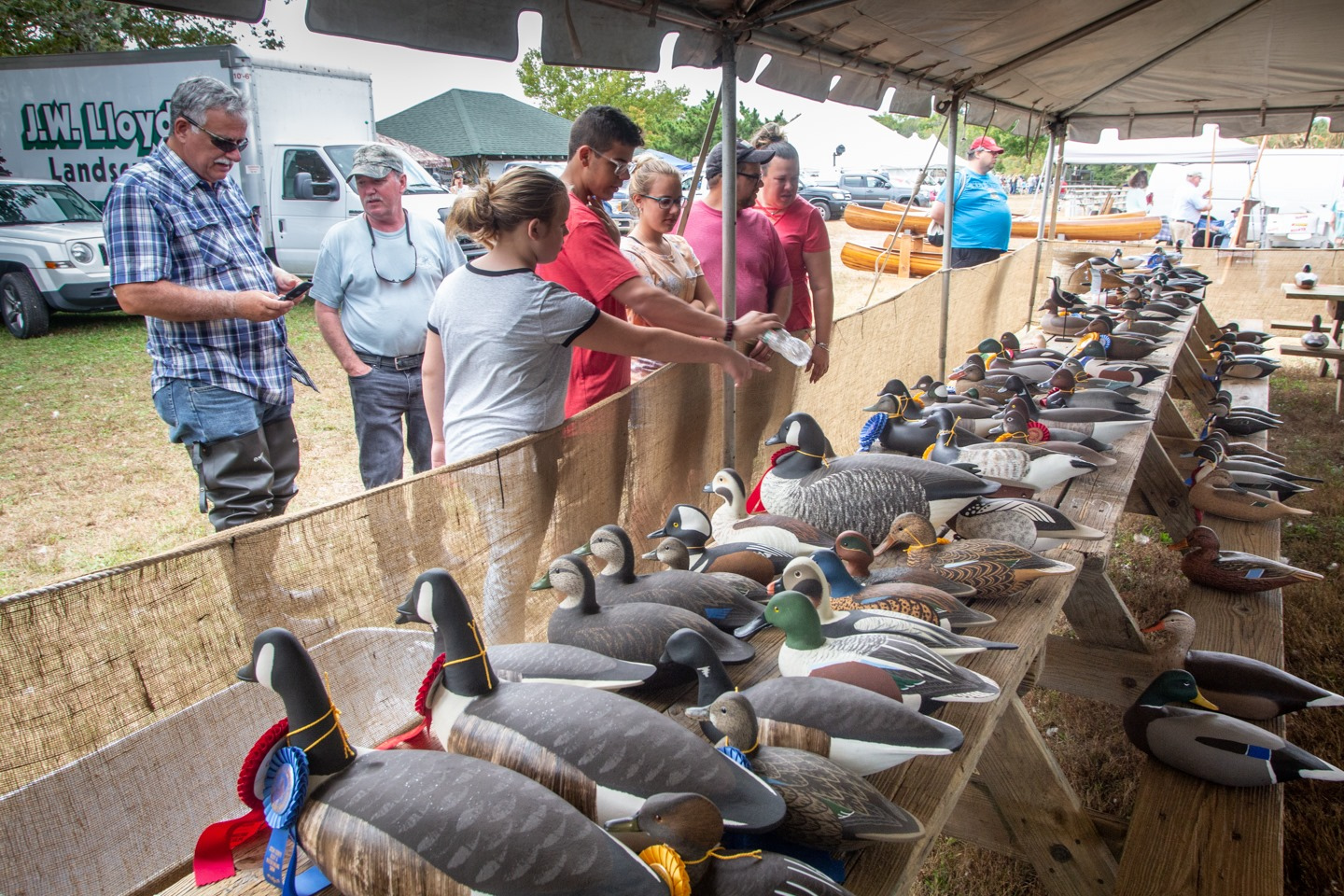
There would be opportunities for craftsman and artists to sell their work, contests, demonstrations, food vendors, and educational displays and programs. While the decoy contests have given many carvers incentive to work throughout the year, Mangum is especially proud of the boat restoration contests which have helped save a lot of significant boats that were not in good condition and would have otherwise deteriorated.
“I think [the Decoy Show] preserves our culture here in Ocean County. I truly believe that if we hadn’t had this show going on, a lot of this stuff would have been lost.”
Even Mangum couldn’t believe how well the show did in its first year and exploded in popularity from then on. By 1986, the show expanded to two days and three locations (Tip Seaman Park, Pinelands High School, and the Tuckerton first aid building). They had exhibitors from as far away as Florida, Hawaii, and even Europe. According to Mangum, the show could not have gotten as big as it has with just the core group of waterfowlers. He credits John Holloway as being particularly instrumental in always pushing to add new aspects to the show each year to attract a wider audience.
“It wasn’t just a bunch of decoys sitting on the table waiting to be judged. We wanted to make sure there were things there for everybody to be able to buy, watch, and do but that also fit within the theme of the show.”
To help preserve Barnegat Bay heritage, educating the public was made a key component of the show. It was important to Mangum to meld in the history with modern day. To do so, the show featured demonstrations by Gary Giberson and the Noyes Museum, presentations, historic photos and stories in the show program, contests like the Waterfowling ID contest, and displays by the likes of the Toms River Seaport, Philadelphia Maritime Museum (Independence Seaport Museum), NJ Waterfowlers, and Ducks Unlimited. Environmental education was also incorporated into the show from the beginning. Conservation organizations that may not be necessarily traditional supporters of hunting culture supported the show because of this mutual understanding of environmental and wildlife conservation.
To capture the enthusiasm of the beginning of the waterfowl season, the show is held on the last full weekend of September. That early fall day in the park has built the atmosphere that sets the Old Time Barnegat Bay Decoy & Gunning Show apart from all other decoy shows. The show starts at 7 AM on Saturday, which means staff and the show coordinator arrive before the sun rises.
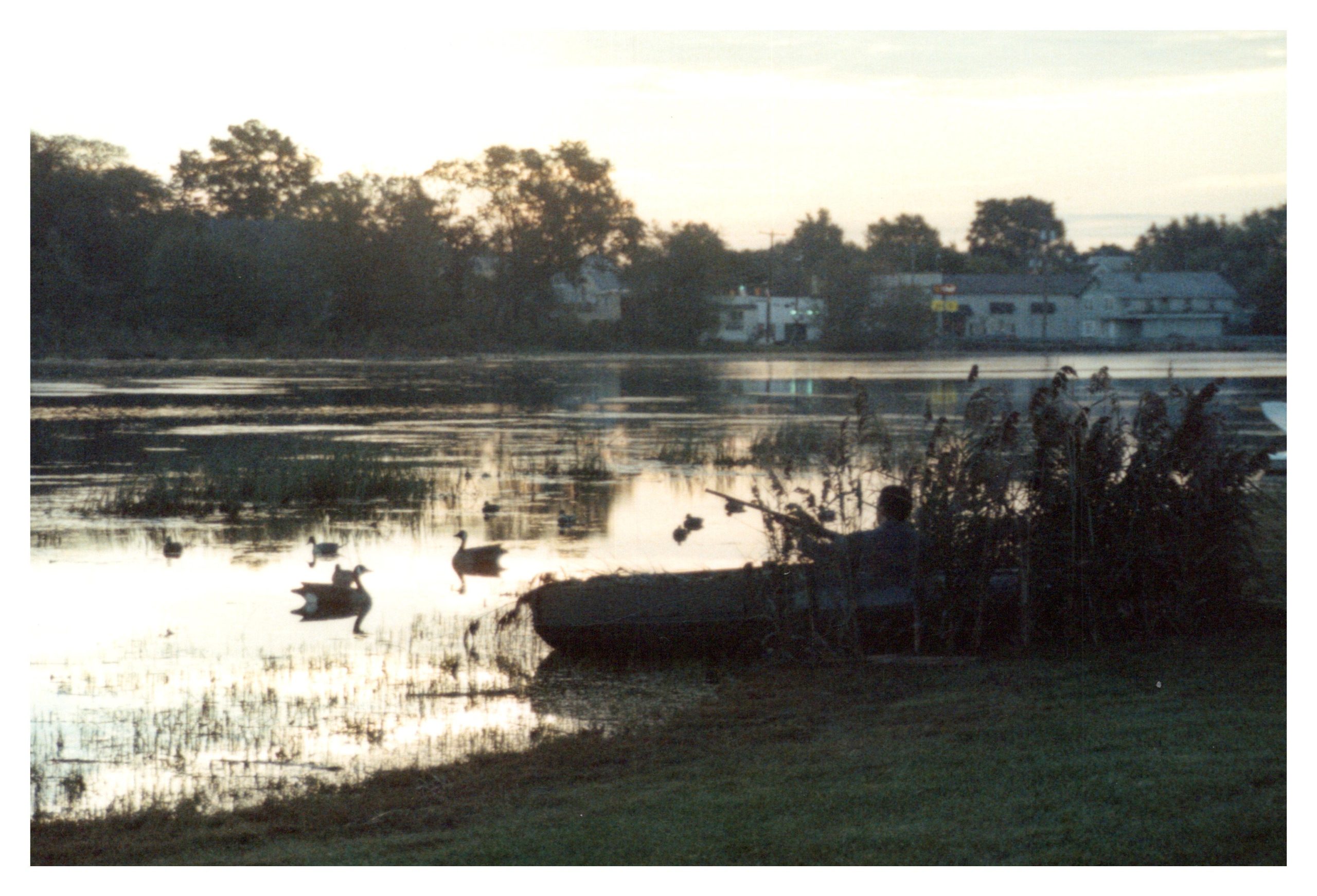
“You pull in there and it’s dark, the sun is starting to come up, and there’s fog that’s lifting off the lake. And it’s cold, it’s sort of frosty. The lake looks beautiful with the sunrise or even after storm clouds. Then the guys start shooting the guns before seven and it’s pretty neat. Everybody’s rolling in all enthusiastic, especially Saturday morning because they’re setting up. The decoy carvers are entering contests. The dogs are there barking, people are talking that haven’t seen each other in a year. And, I think that’s just the basic atmosphere of the show. It’s pretty special.”
While other shows are held indoors, the Decoy Show is held at a park where every effort is made to mimic the feeling of being in a real hunting situation and all aspects of the waterfowling process are incorporated. Instead of skeet shooting in a field, contestants shoot from a Sneakbox just as they would when hunting on Barnegat Bay. Other contests involved rowing a Sneakbox onto the lake and setting up a rig or setting up a gunning boat as you would when hunting.
Mangum further explained that while other shows float contest birds “in a kiddie pool, we didn’t really think too much of that so we said we have the lake here, we’re going to use it. We’re going to float the decoys in the lake and try to judge them like you were looking at them out on the bay as an actual hunting decoy and seeing how it looks.”
Adding to the atmosphere of the show has been the feeling that the Old Time Barnegat Bay Decoy & Gunning Show is Tuckerton’s show. In fact, Mangum worked to dispel the rumor that the show’s popularity meant the County would take it out of Tuckerton and move it up to Toms River. Something the County never had any intention of doing.
“It’s a home town event as much as it was a national event. A lot of people took pride in the show and put up with a lot for one weekend. Picture both sides of route 9, Great Bay Boulevard, and every side street with cars parked on it. People walking. Giant traffic jam backed up almost to Manahawkin. But most people locally were good natured about it because they took pride in the fact it was a Tuckerton thing.”
But not every aspect of being show coordinator was sunshine and rainbows… as least not the weather.
“Thank the good lord at least for one year (1983) we had good weather. After that we had many, many years of severe thunderstorms, nor’easters, tropical storms, hurricanes. You name it, we had it. The only thing we didn’t have was a tornado. But the people at the show are resilient and over the years even with all the bad weather we were able to attract people.”
Never knowing what they would get weather-wise come September, the Decoy Show has persevered in all kinds of weather from extreme storms to 90 degree temperature to years when it has felt like the perfect fall day. In 1984, a nor’easter terrorized staff the entire set-up week including the morning of the show. The Tuckerton Armory supplied the Parks Department with a surplus WWII tent equipped with giant wooden stakes. Ocean County Library’s Harvest Festival was held under the surplus tent and contests were held at the lake. All the other exhibitors were moved to the high school to shelter from the storm, but the show that year was a big success anyway.
In 1985, Hurricane Gloria postponed the show for the following weekend after wreaking havoc during set-up week. Without the convenience of text or email, staff tried to call everyone to inform them of the change. “But,” Mangum reported proudly, “we still got it done.”
One thunderstorm the night before the show even blew a tent into the lake. Another took a large aluminum framed tent and “crunched it up like someone stepping on a beer can.” But weather was fine the day of the show so the tent suppliers were there all-day beating the poles back into place. Another year under 90 mph winds, volunteer Harry Disbrow shot fishing line over the 200 ft. exhibitor tent with his bow and arrow so a ropes could be dragged over it, wound around the middle post, and fastened to anchors.
“And by God it kept the tent up.”
There were even a number of years that Mangum and long-time park staff Frank Pullen slept in the show tents with sledge hammers on hand to fight against severe winds forcing tent stakes out of the ground. In spite of all the bad weather, luckily, a team of dedicated staff and volunteers somehow always put the show back together. It helps, too, that waterfowlers aren’t afraid of a little bad weather.
Mangum served as show coordinator until 1998 when he received a promotion to Recreation Director and later to Director of Parks. The role of coordinator was rewarding but could feel a lot like herding cats. Leading up to the show takes planning, planning, and more planning. A major challenge is laying out over 500 vendors and keeping them all happy.
And on the day of the show, the coordinator has a simple responsibility… putting out all the fires. That included riding around between three show locations to make sure everything was running smoothly, sorting out feuds between vendors, delivering the bad news to irrelevant vendors that they wouldn’t be back, making sure everyone is doing what they’re supposed to, and running around with sledge hammers to drive tent stakes back into the ground.
It also sometimes meant taking phone calls the night before the show at midnight from home. “There’d be someone yelling at me when I’m trying to go to sleep so I can get up at 4 AM to come here. Let’s just say some of these people are very passionate. I won’t go into names. We usually worked things out.”
But some spectacular things have also happened at the Decoy Show. Like the year Guyette & Deeter had a table with decoys going to auction. “Well, just sitting on the table was a Harry Shourds goose that was valued at like $250,000. Just sitting there like it was a duck for $20. That I won’t forget. That was pretty impressive that they would’ve brought that and let it sit on their table in the middle of our show.”
At the first show, Sam Hunt was set up with his hand-crafted rustic furniture, sneakboxes, and banjos. Merce Ridgeway and some other musicians from the Pinelands Cultural Society sat in Sammy’s chairs and started playing music with him, the impromptu act from these legends of Barnegat Bay started the tradition of having music at the show.
It has been fulfilling for Mangum to see some of young people who came to the show in early years as visitors progress to become today’s contest champions. Incorporating youth contests was an important aspect of the show to encourage the continuation of local traditions and to inspire the creation of Malcolm Robinson’s Youth Carving Club, creating a new generation of carvers.
A former board member of the Tuckerton Seaport & Baymen’s Museum, Mangum recalled how the non-profit was an outgrowth of the Decoy Show. By 1990, the generation that was young when the show started was now old enough to make an impact in preserving local history themselves. “There wouldn’t be any Tuckerton Seaport without this show.”
Though he doesn’t brag about it, another moment of pride came when Mangum took first and second place ribbons in full size and model boat contests. “You get a sense of accomplishment because boat building is not like building a cabinet or something. There’s no straight angles. It’s a much more difficult process than other types of things. So you have to be pretty skilled to be able to build a boat.”
Mangum retired as Parks Director on April 1, 2024 after working for the Parks Department for 46 years. He considers the Decoy Show not only to be one of his proudest accomplishments but it represents the core purpose of the Parks Department by serving the public through preservation of Ocean County’s local heritage, supporting local tradition bearers, and educating the public in an enjoyable way.
Mangum hopes the Decoy Show can continue to grow long into the future. He acknowledged that connecting with the modern audience is a bigger job than it used to be. In 1960 Ocean County had a population of around 50,000 compared to the 655,735 reported in 2020. Most of the current residents or their parents were not born in the area and therefore are missing a sense of the local culture that has existed for 300 years.
“We need to try to connect with them and teach them about what made Barnegat Bay important and why these boats were important for hundreds of years. If we want to serve the current crop of people who visit the show, we need to adjust and adapt.”
All in all, Mangum credits a very long list of individuals and organizations in the success of the show. “Volunteers, staff, carvers, boat builders, duck callers, volunteer organizations… There’s a huge group of people that make the show possible and without them we can never have the show… I think that’s the biggest thing, all of these people working together…I’m proud of what we were able to accomplish… I truly believe we have preserved this for our culture, at least for the foreseeable future.”